Every time marketplace fees go up, the same question comes back: should I move to my own website?
The honest answer is usually no, not move. Add. And only once three things are true.
What the marketplace does well
It's easy to forget why you started on Shopee, Lazada or TikTok Shop. They do a lot for you:
- They bring buyers. People open the app already searching for what you sell.
- Buyers trust the platform, even if they've never heard of you.
- Payment, shipping labels and order tracking are already built in.
Your own store does none of that by default. Nobody stumbles onto your web address while scrolling.
What it doesn't do
- You don't own your customers. You can't easily reach last month's buyers when you launch something new.
- Every order pays a fee, and the platform sets it. It can change whenever they decide.
- Your shop looks like everyone else's. Same layout, same buttons, your product next to a cheaper copy.
- The rules aren't yours. Policy changes, ranking changes or a suspended listing can cut your sales overnight.
The 3 tests
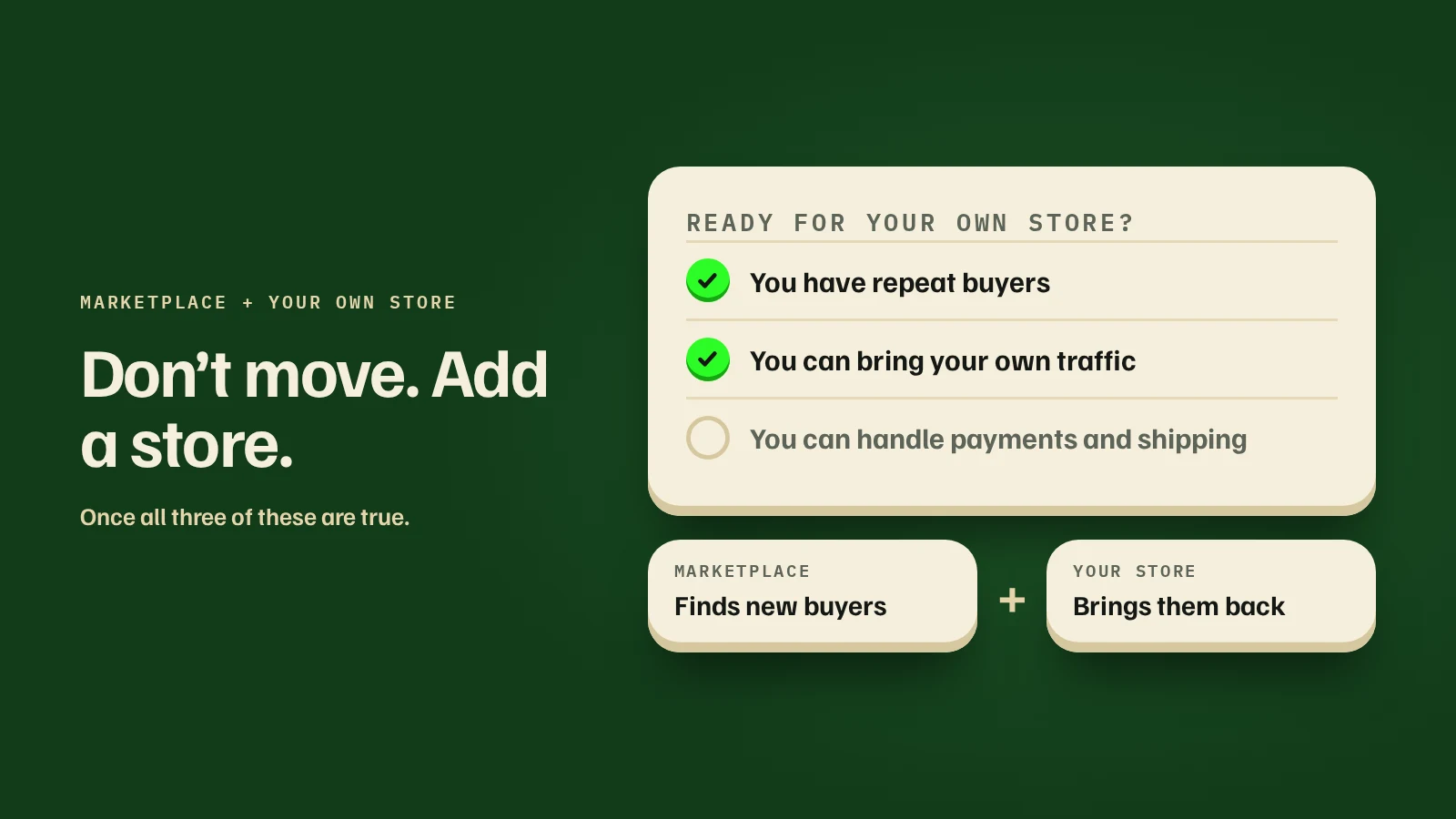
Your own store is worth it once all three are true.
1. You have repeat buyers. People who bought once and came back. They're the ones who'll type in your web address. If every sale is a new customer from marketplace search, your store won't have anyone to bring back yet.
2. You can bring your own traffic. Instagram, TikTok content, a WhatsApp group, ads, or a customer list. Your store only gets the visitors you send it.
3. You can handle what the marketplace handled. Payments, shipping, returns and customer questions now come to you. Make sure you, or someone on your team, has the time.
If one of these isn't true yet, stay on the marketplace and build that first. Your own website is the next step, not an escape.
Keep the marketplace, add a store
You don't have to choose. The two do different jobs:
- The marketplace finds new buyers who are searching for what you sell.
- Your store is where buyers come back, for new launches, bundles, bulk or wholesale orders, and products you don't list elsewhere.
Over time, more of your repeat business moves to your store, and fewer of those orders pay a fee.
A word of care: most marketplaces don't allow you to steer buyers off the platform from inside the app, in chats or listings. Check your marketplace's current rules before you put your web address there. Build your own list through your social accounts, your content and the customers who find you directly.
What your store needs on day one
- Payment options your buyers already use: online banking, cards and e-wallets, through one payment gateway.
- Clear shipping rates, shown before checkout, not as a surprise at the end.
- Product pages that sell on their own: sharp photos, sizes, what's in the box, delivery time and return policy. On a marketplace, reviews do part of this job. On your store, the page does.
- A WhatsApp button for the questions people ask before they buy.
- A way to stay in touch, such as an email or WhatsApp sign-up, so the first order isn't the last.
When to wait
Hold off on your own store if nearly all your sales come from marketplace search, you don't post or run ads yet, or you don't have time to handle orders yourself. In that case, a landing page for one hero product, linked from your bio, is a cheaper way to test whether your own visitors buy.
Not sure which fits? Types of website for a business explains how to choose by where your buyers come from. Or get your website plan to see what you'd need and a price range.